12 children, 2 teachers
Never more than twelve in a room — and always two teachers. That is the difference between a child who is stuck and a child who is helped within seconds.
Registration open for September 2026
Kids Life Skills is a Luxembourg non-profit running a full school-year programme — every Sunday from September to July. Small classes of 12 children with 2 teachers, taught in French, Luxembourgish or English. Complete beginners are exactly who we build for.

Tap an age and we’ll take you straight to the right programme.
Why parents choose us
Never more than twelve in a room — and always two teachers. That is the difference between a child who is stuck and a child who is helped within seconds.
Classes run in French, Luxembourgish or English. Children learn a hard subject best in the language they think in — so you choose, not us.
September to July, every Sunday. Real skills need repetition and a group that grows together — a two-hour taster cannot do that.
The youngest groups start unplugged — floor games, mazes, hands-on building. Screens arrive when they add something, not as a babysitter.
Five programmes, two levels each. A child can join at four and leave at sixteen with a portfolio — and never repeat the same year twice.
One transparent price for roughly forty Sunday sessions. Pay in instalments if that helps, and ask us about support if cost is the only obstacle.
The five programmes
Every programme runs at two levels. Foundations is for children starting from scratch this year. Innovators Studio is for children continuing from a previous year, or already confident. Tap a level to see the languages it is taught in.
 Ages 4–5
Their first taste of how things work — mostly with their hands.
Floor games, giant mazes and screen-free robots that only move if the instructions are right. Cubs invent their own board games, hunt for patterns and learn the quiet superpower behind all of it: try, fail, fix, try again.
For brand-new starters aged 4–5. No experience at all is expected.
 Ages 6–7
The year technology stops being magic and starts making sense.
Pioneers work out how a machine actually thinks: putting steps in the right order, spotting the loop that saves ten of them, and finding the one instruction that broke everything. Unplugged puzzles first, then their first colourful block-coding projects.
For children aged 6–7 starting with us for the first time.
 Ages 8–10
Real projects, designed by them, presented to a room.
Leaders cross the bridge from coloured blocks to typed code and build games and animations of their own invention. They plan in teams, debug each other’s work, and finish the year able to stand up and explain exactly how they made it.
For 8–10s who have never coded — we start at the very beginning.
 Ages 11–13
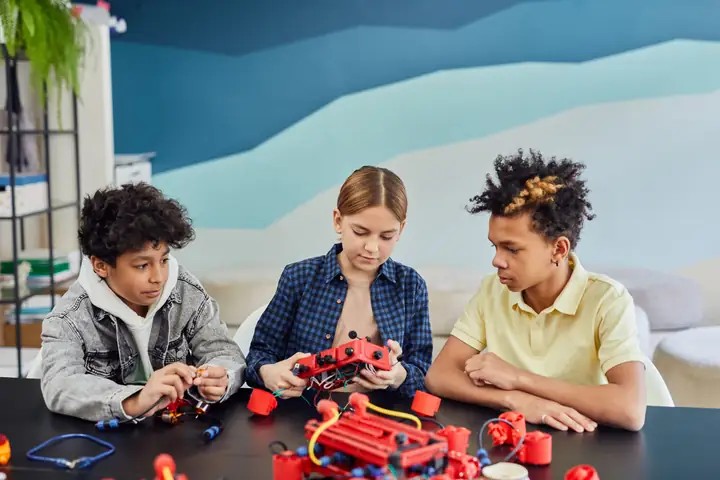
Building real things — in code, wires and circuits.
Navigators write proper text code, solder-free wire up electronics and program robots that react to the world around them. In parallel they learn to navigate that world: privacy, digital footprints, and using AI as an assistant rather than a shortcut.
For 11–13s new to coding — no prior experience assumed or needed.
 Ages 14–16
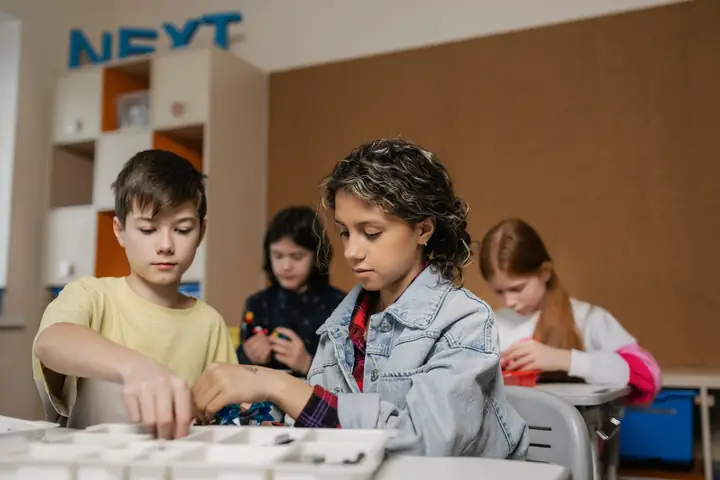
Near-professional skills — and a portfolio to prove them.
This is where a hobby becomes a craft: structured programming, genuine AI literacy, and one project carried from first sketch to something that actually ships. Students leave the year with work they can show a school, an employer or an interview panel.
For teenagers starting properly for the first time — beginners welcome at 16 too.
All programmes run from September 2026 to July 2027 and are open for registration now.
Small by choice
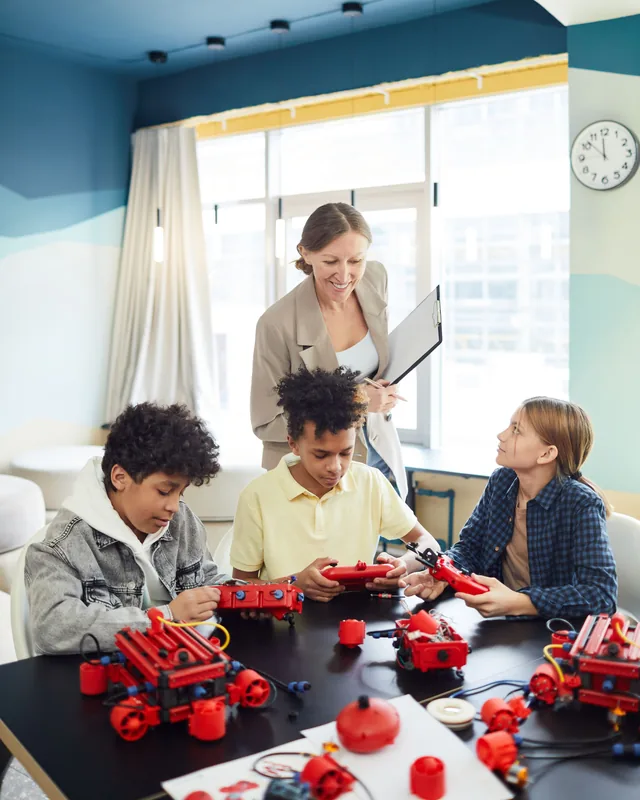
Most children who give up on technology do it in a moment nobody noticed — one instruction missed, then quietly lost for the rest of the hour. With a second teacher in the room, that moment gets caught.
It also means the confident child is stretched while the careful one is reassured, in the same session. That is why we cap every class at twelve and never run one alone.
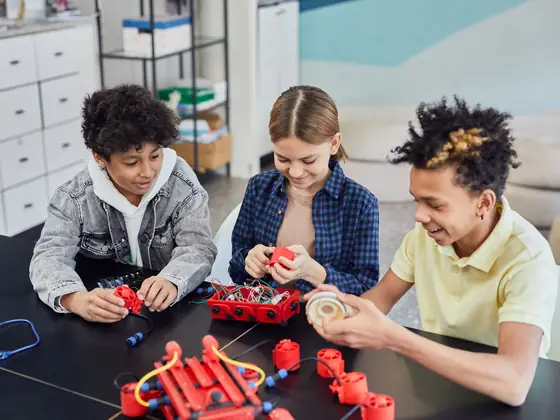
Inside our classes
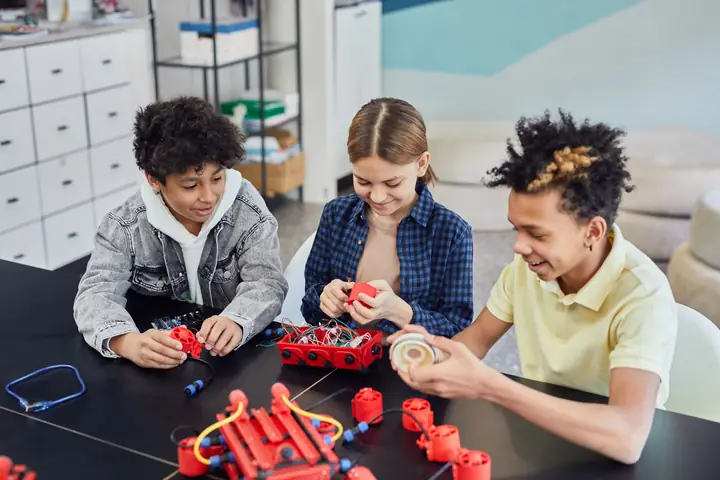
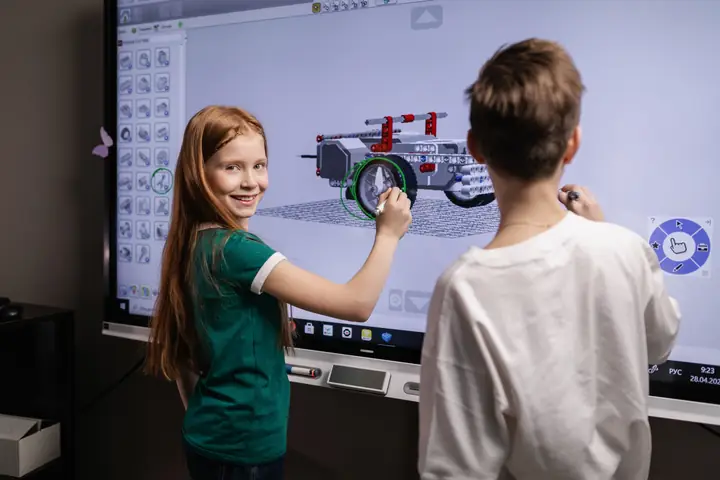
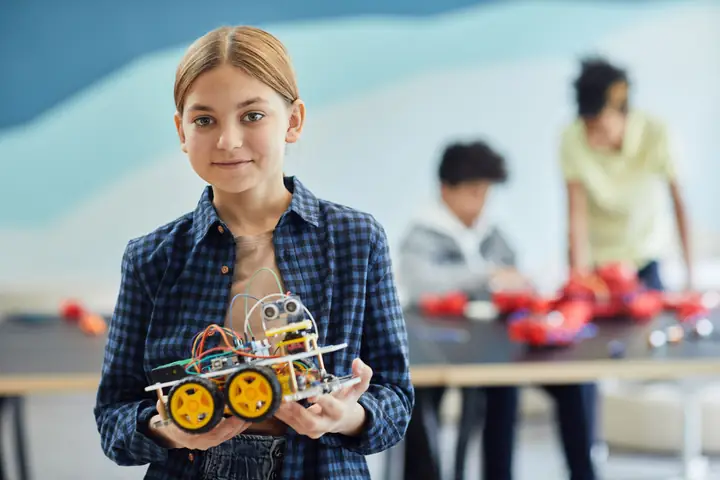
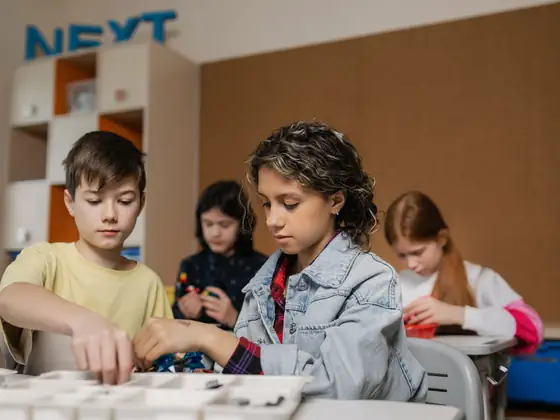
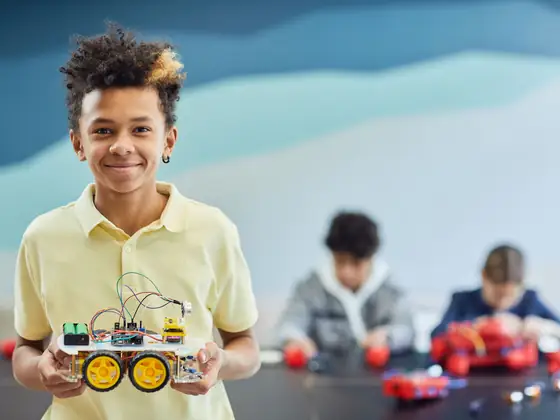
No stock-photo boardrooms. This is what building something you are proud of looks like.
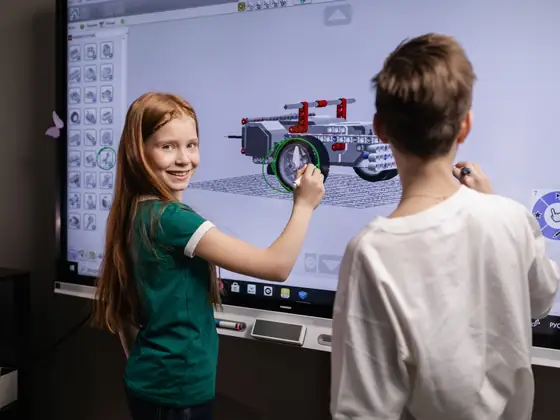
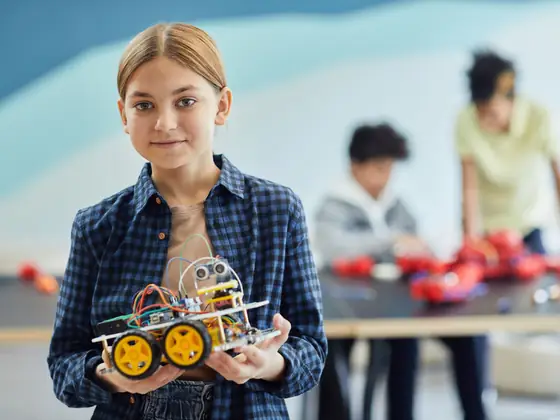
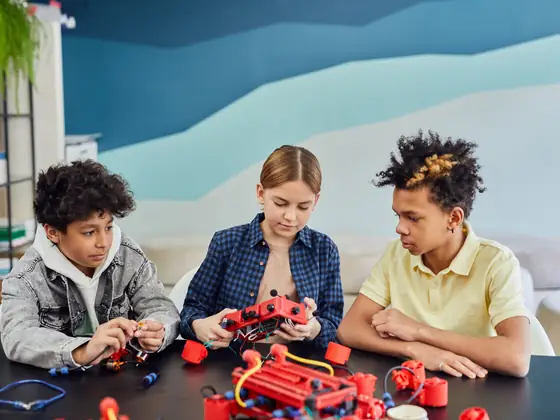
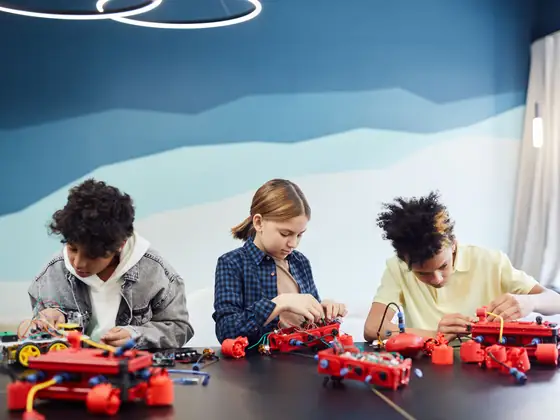
How it works
Pick by your child’s age, then the level: Foundations if they are starting out, Innovators Studio if they are continuing. Not sure? Choose Foundations — teachers move a child up if it is too easy.
Create your parent account, add your child, choose the language of instruction and confirm the place. €150 for the year, payable in instalments if you prefer.
You get the term dates, the room and what to bring. Then it is every Sunday morning through to July — same group, same teachers, growing together.
Questions parents ask
No, and this is the most common question we get. Every programme has a Foundations level built entirely for children with zero experience, and it is the level most children join on. The youngest groups do not even start on a screen — they start on the floor with games and physical puzzles. If a child turns out to be ahead, the teachers will simply move them up.
You choose at registration: French, Luxembourgish or English. Each language is a separate class, so your child is taught — and can ask questions — in the language they think in. Curious Cubs and Digital Pioneers Foundations run in French and Luxembourgish; all other groups run in all three. Availability depends on how many families choose each language, so registering early helps.
Nothing dramatic. The year is built as a long arc, not a chain where one missing link breaks everything — teachers recap at the start of each Sunday and will catch your child up on what they missed. If you know about an absence in advance (a holiday, a family weekend), tell the teachers and they will set the group up so your child rejoins smoothly. There is no charge or penalty for a missed session.
Siblings are very welcome — you manage all your children from one parent account. They are placed by age, so brothers and sisters more than a couple of years apart will normally be in different groups (which most children prefer). Same-age siblings can share a class if there are places. Talk to us if you would like them scheduled on the same Sunday morning so you only make one trip.
Themselves and a water bottle. We provide everything else — laptops, robots, electronics kits and materials are all included in the €150. No laptop purchase, no software to install at home, no hidden equipment list. Older students who prefer their own laptop are welcome to bring it.
The full year is €150 — that is around forty Sunday sessions, so roughly €4 a session, with all materials included. If paying in one go is inconvenient, you can split it into instalments across the year; choose that option during registration or write to us and we will arrange it. We are a non-profit: if cost is the only thing standing between your child and a place, contact us before giving up on it.
Sunday mornings in Luxembourg, from September 2026 to July 2027. Curious Cubs and Digital Pioneers run 10:00–12:00; Coding Leaders, Tech Navigators and Future Tech run 10:00–13:00. Exact venue and the full term calendar are confirmed in your registration confirmation.
Registration for the 2026–2027 year is open now — all five programmes, both levels, three languages.
Browse courses & register€150 for the full school year · instalments available · beginners welcome